Reading Review,
Part A
Some key words that stand out to me from the early reading in
Richardson for this course are:
- Constructivist (location 31)
- Rethink (location 359)
- Discover (location 412)
- Abundance (location 436)
As I consider the direction my learning is taking me toward
Learning Commons, inquiry, deep reading, critical thinking, I think Richardson’s
words stand out as markers for me. I want to discover new learning and
understandings with my students by rethinking traditional pedagogies,
activities and assessments. I want to develop highly constructive learning opportunities
that engage students and encourage connectivity and collaborative effort as
they explore the abundance of information available to them.
I am particularly interested in inquiry through play-based
learning and how it can be adapted for intermediate students. For this particular project, I will reflect on a recent library situation: I work in an
elementary school with students in grades K through 7. In the library I have access
to technology and creativity through the Makerspace. The Makerspace has simple
toys such as Rainbow Looms, dominos and playing cards, as well as more complex activities
such as K-Nex and Lego blocks. I have also endeavoured to include technology by
purchasing Ozobots and have lobbied to store the laptops in the Makerspace for
quick access for other coding activities and research.
I have found it curious and enlightening to observe older students engaging the Makerspace activities with as much vigour as the younger students for which it was designed.
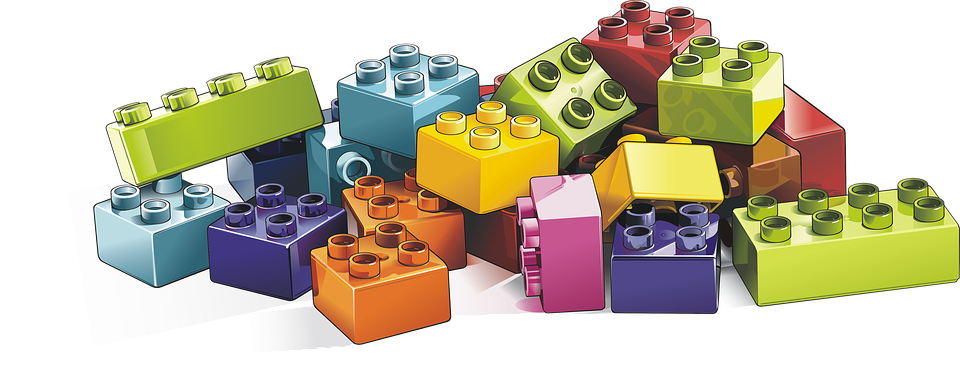
I have found it curious and enlightening to observe older
students engaging the Makerspace activities with as much vigor as the younger
students for which it was designed. The older students are just as keen to
design paper airplanes, create coded pathways for Ozobots and navigate the
complexities of building multi-level bridges. I often see older students
engaging these challenges collaboratively and constructively. It seems to me,
that intermediate students are just as excited to learn through play as younger
students. I am curious to expand the Makerspace and curate some activities for intermediate students. I
would like to explore some non-traditional Makerspace activities and
challenges for older students as well as research a design for a virtual Makerspace
alongside the physical.

I feel that a well-developed, multi-faceted Makerspace is a
highly relevant activity for solidifying the library as more than a book
repository, but as a “collaborative learning hub” (Canadian
Libraries Association [CLA], 2014, p.5), a true Learning Commons - a
third space for learning, an extension of the classroom.
I am interested to research the Makerspace concept and
develop some ways to support deeper engagement and learning through Maker play.
This particular situation allows for a small budget, but there is ample parent
and admin support. Some key questions I would like to research:
- How can the LLC Makerspace be an extension of classroom learning? (connection)
- How to determine whether Makerspace activities are pushing students deeper into the creative process? (assessment)
- What are some activities for more mature (gr 4-7) learners? (varied content)
- How would a virtual Makerspace ‘fit’? (technological inclusion and relevance)
References
Canadian Library Association. (2014). Leading learning: Standards
of practice for school library learning commons in Canada. Retrieved from: http://llsop.canadianschoollibraries.ca/wp-content/uploads/2016/09/llsop.pdf
Richardson, W. (2012). Why School?: How
Education Must Change When Learning and Information Are Everywhere (Links
to an external site.). TED Conferences Publishing. [EBOOK]
Images courtesy of Pixabay

Sarah, very interesting idea! Makerspace is new to me so I am interested in learning more about the concept itself. Play based learning is a great way to engage students to explore, manipulate, build, create, wonder and ask questions. I am very interested in your idea to applying play based learning to older children. Lots of articles I've found on the topic focus on younger children so I am interested in what you find!
ReplyDeleteA very strong first blog post discussing your key concepts and competencies espoused by Richardson and how you hope to implement and support these in your program and space. The observations you discuss are very insightful and provide a good solid thesis to work from in expanding and exploring the implementation of Makerspaces in your school library. Good description, discussion and some early evidence and support. Great start.
ReplyDelete